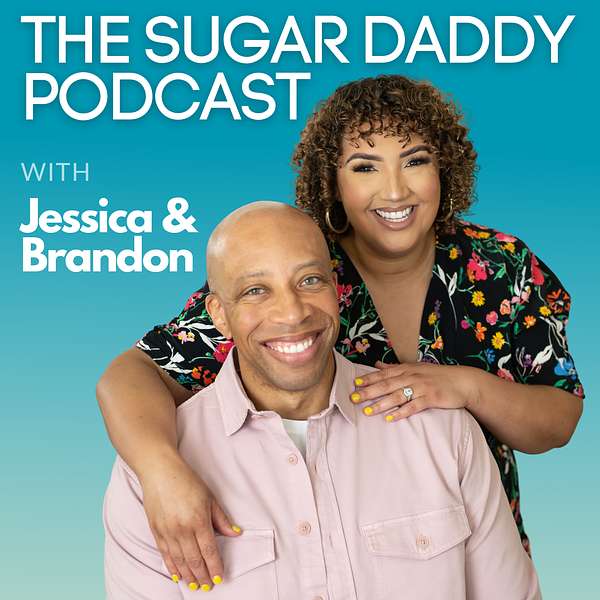
The Sugar Daddy Podcast
Ready to feel confident and in control of your money?
Welcome to The Sugar Daddy Podcast, the podcast that helps you build a clear financial plan so you can feel confident and in control of your money.
This show is for people who make “good money” but feel disorganized and unsure what steps to take next. Each episode is designed to help you turn a solid income into a real plan; one you actually understand and can act on.
Whether you’re working toward financial independence, trying to get organized, or learning how to make smarter decisions around saving, investing, budgeting, or talking about money with your partner, hosts Jess and Brandon break it all down in a way that’s simple, practical, and easy to implement.
Brandon is an award-winning, licensed financial planner and owner of Oak City Financial, with over a decade of experience helping clients across the U.S. build clear, confident financial plans.
New episodes every Wednesday.
The Sugar Daddy Podcast
113: $50K Teacher Salary to 800+ Rental Units: How He Did It
Ever wonder how someone with a full-time job builds serious wealth on the side? In this episode, we meet Ray Tran, a Brooklyn-based middle school teacher who has built a real estate portfolio of 583 units—all while still teaching financial literacy.
We dive into:
- The mindset shift that led Ray from saving to investing
- How he started with just one property and scaled up
- The truth about passive income (and what most people get wrong)
- How he teaches financial literacy to middle schoolers and adults
- Strategies first-gen families can use to build wealth
Whether you're curious about real estate, feeling stuck in your 9-5, or looking for a financial glow-up, this episode will challenge your thinking and inspire your next move.
Follow Ray:
Website: rtinvests.com
Email: ray@rtinvests.com
LinkedIn: https://linkedin.com/in/rtinvests
IG: @rt.invests
Facebook: https://facebook.com/rt.invests
TikTok: @rt.invests
Subscribe to The Sugar Daddy Podcast newsletter
Head over to our YouTube channel to catch this episode in full video form.
Apply to be a guest on the show.
You can also email us at: thesugardaddypodcast@gmail.com
Connect with us on Instagram
We’re most active over at @thesugardaddypodcast
Chat with Brandon
Want to work together? Learn more about Brandon
Book a free 30-min call to see if it's a fit.
Show us some love, hit subscribe, leave a five star rating, and drop a quick review!
Money, relationships, and the mindset to master both. Hosted by financial advisor Brandon and his wife Jessica, The Sugar Daddy Podcast breaks down how to build wealth, unpack old money beliefs, and have real conversations about love and finances. Their mission? To help couples and individuals grow rich in every sense of the word: emotionally, relationally and fina...
In today's episode, we talk to Ray Train, a Brooklyn-based middle school financial literacy teacher, who, despite his low salary, has amassed a real estate portfolio of over 580 units across multiple states and now teaches others how to achieve financial independence through smart money habits. If you've been wondering how passive passive income really is, then this episode is for you.
SPEAKER_00:Sugar Teddy Podcast Go. Learn how to make the pockets grow. Finds the freedom spare week, bro. Smart investments, money flow.
SPEAKER_02:Hey, babe. What are we talking about today?
SPEAKER_03:Today we have a special guest, and we are going to be talking about investment properties, being first gen, um, how passive is actually owning real estate? Because you know, the internet constantly tells us, just buy real estate and you'll never have to work again. So we're definitely going to get into that. And then most importantly, um, this guest is also teaching financial literacy in middle school, which is really exciting. So we want to get into that. We're going to welcome Ray Tran to the Sugar Daddy podcast so that we can get into this conversation. Ray, thanks for being with us today.
SPEAKER_01:Of course. Thanks for having me. Really excited to share and answer whatever questions you may have.
SPEAKER_03:Awesome. Well, let's get into your bio, Ray, because you've got a lot going for you. We want to make sure our audience knows exactly who we're chatting with today. Ray Tran is a Brooklyn-based middle school financial literacy teacher, wealth and real estate coach and investor. After starting his career at Ernst Young, Ray pivoted from corporate life to education, driven by a passion to mentor others. A life-changing moment came when his father passed away, motivating Ray to build passive income and create time freedom for his family. He has since built a diverse real estate portfolio of 583 units across multiple states and now teaches others how to achieve financial independence through smart money habits and asset ownership. Ray's mission is to help people break free from the rat race and live a life of abundance by sharing both wealth and knowledge. Ray, amazing. Thank you for being with us.
SPEAKER_01:Thank you. Thank you.
SPEAKER_03:Okay, we got to get into your first money memory because we always feel like people's money stories starts somewhere. So we'd love to hear your first money memory before we really get into it.
SPEAKER_01:So to be fully transparent, I've listened to some episodes and I knew this question was coming.
SPEAKER_03:Yep.
SPEAKER_01:So I had a couple of different answers, but I'm just gonna say the first one came to my mind.
SPEAKER_03:Okay.
SPEAKER_01:So I'm very big on sports. And one of the things I did when I was a kid was I bought basketball cards. And I remember one time when I bought a bought a basketball card, uh pack, and I opened it up, and it was a Michael Jordan. I think it was a retractor, refractor card, whatever it was. It was highlighted, it was very, very pretty. So I decided to look it up and I saw it was worth, I think, I believe it was$500. Well, so I saw a sticker that says please do not remove. So obviously as a kid, I removed the sticker.
SPEAKER_03:Oh see your reaction. I see where this is going. I see where this is going.
SPEAKER_01:I I posted on eBay and I, you know, I said, tell my dad I got this car, it's worth some money. So we sold it. And because I ripped off the sticker, it sold for about half the value. And that value was about$200. And that$200 went to my account, which I obviously used very, very quickly. So I guess a couple of things from that story says don't remove, do not remove it.
SPEAKER_00:Yeah.
SPEAKER_01:That's a good lesson. And two, just seeing that there is what you have is worth what people are willing to pay. So for me, I bought a car, I bought a pack of cars for I mean, like five bucks, whatever it was back then, and just get something that would be what should have been, you know, 100x my return. Being about 50x was something that was pretty cool to me, that I can buy something and I sell it for more. So that was really cool.
SPEAKER_03:Very cool. How old were you?
SPEAKER_01:I would say it was definitely elementary. Um eight, nine years old.
SPEAKER_03:Okay.
SPEAKER_02:Yeah, so I I I felt that one because as as a kid, I used to collect baseball and basketball cards too. Never fortunate enough to open up a five-dollar pack and find a Jordan card, but you know.
SPEAKER_03:Valuable lessons there. Yeah. Wow. Kid stuff. Was were there any lessons about the$200 that you did get about, you know, maybe not spending it right away, saving it, um, any kind of discussion after that win? I mean, it's still a great ROI, right? A$5 pack turned into$200 for you at a young age. Um, but what was the conversation like between your dad at the time?
SPEAKER_01:I mean, my dad was, I want to say use the word spoiled, but I mostly got what I wanted as long as I had good grades. So as long as my grades were good, I behaved, I was relatively good to my younger sister, I got what I wanted. So even though it was my money, like, you know, my dad was still, you know, if I wanted to buy something, most of the time if I earned it, he would give it to me. So I guess there wasn't really a money lesson in that. That lesson came later on in my life when I realized what I could have done at an early age. Because they always say the best time to invest is, you know, way back then. I should have done it earlier. But now the best time to invest is just now, right? Now you can't go back in time.
SPEAKER_03:Yeah, absolutely. What a great story. Thank you for sharing that with us. Would love to pivot into um your teaching career. So you left Ernst Young. Um, maybe walk us through, you know, why you left, because obviously you hear that name. It's prestigious. It comes with a lot of like, ooh, that's so fancy. Why would you leave that to go teach middle school in Brooklyn? Right. Um, we'd love to hear that story to get us started. Yeah.
SPEAKER_01:Absolutely. So I always wanted a big finance corporate job. You know, growing up, my dad, first gener, I'm a first generation American, but I wasn't born here. But someone told him the stock market was a good idea. So he would tell me, hey, you know, hey, Raymond, I bought Dell, I bought Intel, Microsoft, you know, back in the day, these were the blue chip stocks. And he would say, Oh, this is going up. And I was like, okay, you know, that's out. You can make money through the stock market. So it's natural for me to major in finance in college. And when I got my job, I thought I was set. You know, I was working in Times Square, big four accounting firm. You know, I got to dress up, walk around a briefcase. This was gonna be my life, right? Big office. So when I got there, it wasn't what I thought it would be. Within a year, I realized that I wanted to call in sick a lot. And they gave me unlimited sick days. So what does that mean? I get to call out unlimited times. I was working weekends, I was working past midnight, I was traveling for work, doing some consulting, and it just came down to I couldn't see myself doing this for 40 years. So I decided to well, this was 2007 when I started. I didn't know what to do. I knew within the first year it wasn't for me, but I didn't know what to do, so I just stuck there. New Year's Eve 2010. I ran to a college friend. He was a teacher, he was happy. He made enough money to buy a place in Mahan. Most importantly, he was happy. So I thought, all right, it can't be that bad if he's able to afford a place in Mahan. So I said, I never considered becoming a teacher. And the main reason why I considered never becoming a teacher was because I saw how my teachers were. I saw how they dressed, I saw what cars they drove, and I said, I need to make real money. I can't become a teacher. But my most of my, you know, young life, I was working with students, like in high school. I volunteered, I tutored kids. I mean, I enjoyed working with you know our youth. So I said, hey, why not just do that? You know, sure, I'll take a pay cut. But I've always been a person that I was able to hustle when I was younger, whether it be flipping sneakers, basketball, trading cards, or selling things on eBay, I always found a way to make a quick buck. So I said, I'll make it up by hustling more on the side. But I wanted to do something where I'd have a platform to really make a difference. In my corporate job, I felt that I was just another number, you know, just putting in my time sheets, just getting a paycheck. And all right, what do I do with that money? But being a teacher, I still remember my fourth grade teacher, Mr. Blutall, and he was a person that got me over the hump in terms of my my ELA reading skills. And I'll never forget that name. Right. And it's just one of those things where there's certain people in your life growing up in education that you'll never forget. So I wanted to be that person for my future students.
SPEAKER_03:That's a wonderful story. I wonder, I so I'm a former teacher and I always am like, well, nobody goes into teaching for the money, right? So how do you go into how did your buddy go into teaching and afford a place in Manhattan? I feel like, is there a piece missing there?
SPEAKER_01:I didn't ask the full story. He probably got he probably got some help with the down payment. That's my guess.
SPEAKER_03:Yeah.
SPEAKER_01:Probably wasn't a lavish place. Maybe it was a studio. I didn't really ask. Okay.
SPEAKER_03:I was like You didn't dig into the details.
SPEAKER_01:I didn't really dig. I kind of was looking for a way out.
SPEAKER_03:Yeah.
SPEAKER_01:So I was like, okay. The biggest piece was he was happy. Right. I just I just wanted to be happy. Like I'm 20, 23, 24 years old. Like, I want to be happy.
SPEAKER_03:Yeah. All right. So then take us through. You had that conversation. You're like, I'm ready to be happy.
SPEAKER_02:You said this. Sorry, before you go in. You said this around 2007, 2008. Because also that's, you know, for those people that are out there that are old enough to remember the uh the crash. Yeah, the big crash that happened. And I ironically, I was living in New York at that time, having the hardest time trying to find a job.
SPEAKER_01:Yeah, absolutely.
SPEAKER_02:Didn't look at didn't look at teaching though.
SPEAKER_01:I, you know, I didn't I didn't really I didn't get a raise in 2008. You know, I I got promoted, but I didn't get a raise. I got a bonus for the promotion. So I mean, I left my job making 60,000. You know, it wasn't like I was making multiple six figures, right? And then teaching at the time, we would start somewhere in the 40s or 50s with your master's. So I took a cut. Obviously, I didn't work really for two years to get my master's in education. But to me, I was like, this is a small price to pay for something that makes me truly happy, or I think will make me truly happy.
SPEAKER_03:So then you applied to be a teacher and got into teaching, and now you teach finance at the middle school level. Is that right?
SPEAKER_01:Correct. So we go back. So I got hired full-time in 2012.
SPEAKER_03:Okay.
SPEAKER_01:So between 2010 and 2012, I was subbing, going to school. When I got hired, I was teaching regular core math. So sixth and seventh grade, teaching them things for the state math tests. A couple of years later, I realized that uh in New York City, there's something called specialized high schools, like some of the top high schools in the country. And I realized that my students weren't getting in there, even our top students. And basically, you take a test, if you score high enough, you get into the school. It doesn't matter your grades, it doesn't matter your behavior, you just gotta score well on the test. So I realized that our best students were not getting in. So I told my principal I wanted to start a math talent. So in our school, kids choose a talent, whether it be dance, vocal, art, technology, or science. And I said, I want to start an advanced math class so I can teach these kids and be two years ahead of schedule. Because our eighth graders are taking a test where you need to know ninth and tenth grade level math. So how can we expect them to have the tools to get there if we're not preparing them? So I want to teach seventh and eighth grade level math in sixth grade, teach them eighth and ninth and seventh grade, and so on to give them the best opportunity. So that's how math talent started. And then a couple of years later, she came to me, hey, there's this program called Virtual Enterprise, and they teach kids how to start their own business. I want you to teach it because you have a corporate background. And naturally I said, No, not, I don't really want to do that. I'm very comfortable with what I'm doing. You know, I don't I don't want to change anything because it's more work.
SPEAKER_03:Yeah, of course.
SPEAKER_01:But it turns out to be one of the like the best decision in my career because I got to I got a curriculum for seventh and eighth grade. And my sixth year curriculum, I created myself. But if I'm teaching kids how to build a business, there needs to be skills like financial literacy. They need to learn, you know, how to save money, how to borrow money, things like that. So I basically just turned my curriculum into a three-year program where the kids learn the stock market game. They learn about how to invest in stocks, they learn about um budgeting, saving, they learn how to do resumes, do graphic design to build a business. And in those three years, the hope is that by the end, they'll be able to understand financial literacy, they'll be able to understand why you should invest, how to invest, and also learn the skills to build a business. And most importantly, to take that home, bring it back to the parents, because the majority of the students in my school are first generation Americans or immigrants themselves that weren't born here. I feel like the majority of people in general, but most people that come to the country, they save their money and that's all they do.
SPEAKER_00:Yeah.
SPEAKER_01:So I tell them if you're saving your money, you're probably losing money. Even if you put it, if you're putting a piggy bank, you're losing money because of inflation. So to teach him that to really build wealth, you want to be able to learn to invest.
SPEAKER_03:My gosh. You just said so many amazing things. I just want to pause and appreciate the fact that you're doing this at the middle school level, because I mean, it's widely known that financial literacy is not taught, especially not in public school systems, even in the private school system. And then maybe in college you can take a finance class or an economics class, but it's not personal finance. It's not budgeting, saving, credit scores, investing, how to read, you know, information about the stock market. So that is amazing. And then the fact that you're taking it the step further and, you know, making sure that the parents are getting involved too, because we've had a lot of first gen uh guests on the podcast. And it what you said is the total sentiment, you know, like, hey, it was save our money, don't spend it, don't spend money you don't have. And that's kind of where the buck stops. Um, pun intended, you know?
SPEAKER_02:I can't say the one positive that you see a variance in between, like, you know, first generation um immigrants as compared to, you know, several generations of uh um families who've been here in the US, is that immigrant families save more than, you know, the traditional several generation American family. And, you know, that's the biggest hurdle that most people have is that they don't have the ability to save. They haven't gotten that um habit in place. So once you have that habit in place, it is such an easier transition to say, hey, now that you already have that money saved, this is now what you need to do in order to grow it properly.
SPEAKER_01:Yeah, I mean, I completely agree with that. The one caveat is that because they're always saving, I think it's because of a scarcity mindset.
SPEAKER_00:Yes.
SPEAKER_01:Because there isn't enough, because they came here with nothing and whatever they have, they have to keep. So it's a real struggle to convince people to move from a scarcity to an abundance mindset, especially people that come from basically nothing. So that's the real struggle to shift, especially with families.
SPEAKER_03:I wonder, do you feel like you being first generation helps you tell that story and helps you maybe break down some of those barriers? Because I mean, I think if we had that same conversation with somebody who maybe doesn't look like them, or you can tell, like, hey, you've had privilege your whole life, you know, it's harder to then relate and hear somebody say, here's what we need to do, here's why, this is how we do it. You know, you can kind of put yourself in their shoes. Do you feel like that helps you in teaching this material?
SPEAKER_01:Absolutely. I mean, it's all about being able to relate to you, right? That's why it's so important the art of storytelling to share the transparency of where you came from, what you went through, and what you have. I mean, I'm coming from probably no one of the lowest paying jobs as an educator, right? We don't, you know, we don't make anywhere near enough, you know, based on what we do. But, you know, if I'm saying if I can become financially free, if I could build wealth, if I could build assets as a teacher, you know, you're making a lot more than me. Technically, you should be able to do it. And for a while, I was like, oh, well, Ray, you don't, you don't have kids. Okay, now I have a kid. I have one kid, I'm a parent, my wife is not working because we have that option. So I I thought that that would be a lot easier to relate. But I what it comes down to is regardless, there's always, you know, reasons for people not to change what they do. And for a long time, I took it very, I took it to heart if I couldn't personally shift someone in their mindset or shift someone, make them believe that something is possible. And, you know, even as a teacher, honestly, I focus on the people that actually put in the effort. You know, there are always kids that don't do the work and honestly don't really pay them much mind because if they're not putting energy in, like, why would I reciprocate? My administration may not love me saying that, but we won't send them a clip. It's fine. I'm being very honest. You know, if some kid is, you know, I have so many former students that come back and say, hey, Mr. Tran, you know, I'm ready to learn. Teach me. So what I do is I give him a book, usually rich, that, poor, dad. I say, finish this book in a week, and then we'll talk. And if you finish a book in a in a week, we'll have a conversation. I'll be able to tell during that conversation whether you actually read it. And then I'll take them under my wing and I'll mentor them.
SPEAKER_03:But if they don't Yeah, you have to put in the work.
SPEAKER_01:Yeah.
SPEAKER_03:Yeah, you have to put in the work.
SPEAKER_02:And the thing is, you only have you have limited time. You know, you have limited time in a given day. So you want to allocate that time towards people that are really interested and are gonna do the work behind there. And unfortunately, you know, it's not gonna be everybody.
SPEAKER_03:Yeah. Now is this um is this a voluntary class or course or three-year program, or does everybody go through it?
SPEAKER_01:Everyone chooses a talent.
SPEAKER_03:The talent. Okay. Yeah.
SPEAKER_01:And so the talent that I teach is under math talent.
SPEAKER_03:Okay.
SPEAKER_01:Technically.
SPEAKER_03:I mean, I would have stayed as far away from that as possible. 100%, yeah. As a middle schooler. Like, I mean, looking back, like that would have been incredible, but that that's never something that I would have chosen. Do you have to do, like, I don't know, are you doing some fun, cool advertising? Like, what? I mean, how do you get them into? I mean, let's besides the Asian kids whose parents are gonna be like, yes, go the go through the math talent track. How are you getting people into this track?
SPEAKER_01:In sixth grade at the beginning of the school year, all the talent teachers go to auditorium and we pitch.
SPEAKER_03:Ooh, fun.
SPEAKER_01:We pitch.
SPEAKER_03:Yeah.
SPEAKER_01:So I say, if you like money, raise your hand.
SPEAKER_03:Yeah.
SPEAKER_01:If you want to learn how to make money, raise your hand. And all the teachers raise their hand too. So, well, if you want to learn how to make money, you want to learn how to invest your money, follow my class. But the thing is, there's a good amount of students that join me because it's math talent, because they love math. Because a lot of kids that love math.
SPEAKER_00:Yeah.
SPEAKER_01:And, you know, we don't obviously there's math in everything that we do, but I'm not doing straight math skills. So I think there are certain students that get disappointed. And to be very honest, in sixth grade, I'm really, really strict because I know I'm gonna have them for three years.
SPEAKER_03:Yeah.
SPEAKER_01:If they're, they want me to hold their hand, I'm not going to do that. I tell them straight up, I'm gonna, I'm gonna tell you one time, I'm gonna give you instructions. And if you ask me again, I'm gonna say to Google it, to read it, or YouTube it. That's or ask your friends.
SPEAKER_03:Yeah.
SPEAKER_01:It's literally what I say. Because by eighth grade, they're running their own company. They're they're doing, you know, they're doing uh payroll, they're you know, creating websites, they're doing business pitch competitions, they're doing trade shows, like they're doing amazing things. So if I'm holding their hand throughout three years, they're never gonna get to that point.
SPEAKER_03:So yeah, I love that approach. You I taught sixth grade and they are like little babies. Babies, babies. Oh my God. They come over from you know elementary school and they are babies. So you saying that, I'm just like, oh, be sweet to the babies. But I totally get it because you have to, you gotta kind of whip them into shape, you know, so that they can really learn and grasp the concepts and the accountability that it takes to, you know, potentially run a business. So I love that.
SPEAKER_02:My mom's a retired uh college math professor. So math was the Norman R.
SPEAKER_03:That's all.
unknown:Yeah.
SPEAKER_02:Would you have joined math talent or would you want to stay away from he would have stayed away? No, I wouldn't have.
SPEAKER_03:I probably would have if you would have okay, after the pitch of you saying who wants money.
SPEAKER_02:You gotta remember basically what he's describing is what I was. I was two years ahead in math.
SPEAKER_03:Yeah, but not because you chose a talent track.
SPEAKER_01:Because I was good at it.
SPEAKER_03:Well same with me.
SPEAKER_01:I was in math talent when I was in middle school in a different school. I mean, math is always natural for me. I'd still calculus, then it got a little wonky.
SPEAKER_03:Oh my god.
SPEAKER_02:The thing I liked about math is that it's a definitive answer. When it comes to writing a paper, that's up to interpretation from the teacher.
SPEAKER_03:Yeah. Brandon is great at math. He's not great at writing. Yeah. Um, I would love to pivot into, you know, what you already stated, which we unfortunately know is the standard in the US, which is teachers are vastly underpaid for the work that you do. Um how do you go from, you know, 40 grand a year, 50 grand a year as a teacher in New York, which is an expensive place to live, first off, to, oh, I own 580 plus units in real estate. I mean, that's the epitome of like you don't have to make a lot to own assets. So I would love to go into that conversation because I think that's a common misconception that people use as an excuse. Oh, I don't make a lot, so I can't do this. Um, so we'd love to hear your journey there.
SPEAKER_01:So I realized that I need to make up my salary. So I did. As teachers, we get out at 210 p.m. four days a week, and at 350 on Mondays, we get, we work 180 days in a year, we have summers off. So I worked seven days a week to start. I coached basketball, I did private tutoring, I drove house to house to tutor people and state exams, SATs, ACTs, all that. Like I I was grinding seven days a week, driving from house to house before COVID. So what I realized was that was active income. Where if I don't work, I'm not going to get paid. So I needed to learn how to put money into passive income streams. When when my dad passed away, I realized that he never got to the retirement age. And no matter how much he worked, he still had to keep on working. So I decided that I have to have a different path. So I went down a rabbit hole, books, podcasts, spoke to everyone I knew that was wealthy, that made money. And two asset classes that stood out was the stock market and real estate. So I was like, I'm gonna go go invest in that. So I started off with the stock market, and I put my money in stocks. I maxed out my Roth IRA, I maxed out my 403B, my pre-tax accounts, put money in my taxable brokerage account. And then I purchased my first property in 2014. I purchased a two-bedroom apartment. My mom, well, my dad passed away, so my my mom, my parents helped me with some of the down payment. And, you know, when I was living there, I was just working a lot. And then I later got married. I bought, we bought a condo in 2021. I rented out my first property. That's my first time being a landlord. And I kind of, for lack of better words, cheated because I just had one of my best friends living there. And I didn't have to really worry about anything. I said, hey, listen, I'm giving you an under-market price for rent. This will literally make me break even. I'm not making a dollar off of you. Just keep the place good. And don't call me with any issues. Just deal with it yourself. So that's what happened. And then in 2022, I purchased my first out-of-state property. Bought a three-bed, one-bath house in Ohio for$106,000. And that opened my eyes. The fact that you could buy a house for$100,000, I was like, whoa. So for that, I'd use a turnkey company. A turnkey company is a company that buys it, renovates it, puts a tenant in place, gets a property manager to manage it, and you take it over. So it felt very easy. So that's what I did. And I like to say, if I knew what I know now, I would never have bought it. But if I never bought it, I wouldn't be where I am today. And the reason I say that is because they had a spreadsheet that put in a lot of things that says that I'm going to make a couple hundred dollars a month. But there are three things they didn't take in consideration: vacancy, capital expenditures, and maintenance. When they move out, there's a time period where one, I have to fix up the place, and two, they have to get a tenant in place. Every month that someone is not in there paying me rent, I have to pay for it. So that's vacancy. You have to account for that. Maintenance and CapEx, the roof, the boiler, the appliances, all that stuff, it comes out of my pocket. So now I know it's a bacon about 15 and 20% into my expenses for those categories. And if I put that in there, I would have realized that it was not going to be a property that would make me money. It would be cash flow negative. But I don't regret it because if I never did it, I wouldn't be where I am today. I wouldn't have taken that first step.
SPEAKER_02:So living in New York, what made you decide to purchase a property in Ohio?
SPEAKER_03:Had you ever been to Ohio?
SPEAKER_02:Never. Still have not.
SPEAKER_03:Still have not. I I knew. I just knew you were gonna say that, which is why I wanted to ask that question.
SPEAKER_01:Yeah. I mean, I just saw that things in the Midwest were so much cheaper and more affordable. Right. So I was like, let me start there. And so I bought that. And then once I bought that, I was ready to go all in. You know, I had I was going through a divorce, and I had to sell my condo anyways. I was like, I'm gonna sell both my properties and go all in out of state. And in terms of real estate, or there's three different types of things you need. There's time, knowledge, and money. I had the time, I had the capital, but I didn't have the knowledge. So I went and seeked a coaching mentoring program, a community. So in December 2022, I joined Zencoast University, uh, which was a community that offers mentoring, coaching, online curriculum, all that. And in 2023, I purchased four properties in Philly, Philadelphia, PA, using the Burr method, which is buy, renovate, rent, refinance, and repeat. And the beautiful thing about that is that you get to recycle your money and use it for more and more properties. So to share actual numbers, I bought a four-bed, one bathhouse for$108,000. I put$80,000 in renovation. So I'm all in for$188,000. It got appraised for$288,000. So I gained$100,000 in equity from that deal. I did a cash out refinance for 70% of that, which is about$201,000. I took that$201,000, paid myself back for the investment that I put in, still had money in my pocket, and I had a property that was renting for$2,100. So I took that same money and did it three more times. And that's how I kind of jumpstarted things.
SPEAKER_02:You know, as far as, you know, or you're the one that's handling finding the contractors and everything like that to do the renovations. Can you kind of break that down?
SPEAKER_01:Absolutely. So first, I am probably the least handiest person ever.
SPEAKER_02:I'm not handy either.
SPEAKER_01:So I mean, I guess to add on to one of the questions before why I bought out of state, I realized that if I own a property next door to me and something was wrong, I would call someone to fix it. So it doesn't matter if I live next door or thousands of miles away. It's gonna be the same process. I'm gonna call someone to fix it. So I don't need to be, I don't need to see it. I probably won't even know what to do if I see it.
SPEAKER_03:Right. Yeah.
SPEAKER_01:So um, so yeah, so how I got the deal, I did something called PML, private money lending. I was a private money lender a little before then. I met someone that was, hey, give me X amount of money, I'll give you return, and then you know, I'll pay you out. So we I we did that a couple of times. And when I met him in person, I said, hey, if you're paying me 20%, you're obviously making more. So I want to do what you're doing. So he said, you know, I'll send you deals. So I said, sure. And when he sent me the deals, I realized that I didn't know how to analyze the deal, which is why I joined Zencoach University for the coaching. He was someone. That actually, his father was a contractor. He would source the deal. He would take care of the renovation. And he even offered to manage the property for me. So for me, it was quick and easy. Plus, Philly's about hour and a half, two hours away. I could drive there if I wanted to. And for the first property, I did go and visit it three times, but I have not visited the other properties since. And even if I go to Philly, I won't see the properties. It doesn't do it.
SPEAKER_03:It doesn't matter. Yeah.
SPEAKER_01:Yeah, it doesn't really matter. I mean, I have a property manager that tells me what's going on. They, they, they collect payments. I see the distributions. I have a portal set up for everything. So the construction itself, it was relatively hands-off. I mean, I had obviously I was part of the process and picking what to do. I felt the need to go check on it to see how it was doing. And no, I think what many people don't think about is if you can build a team. I mean in any business, right? If you could build a team and systems in place to take care of things, you can be pretty passive. Right. Obviously, you can you can just check, you know, do daily updates. You could check and you could see for yourself, sure. But if you can put a team in place to run your business, to run your properties for you, it's a lot better experience instead of doing everything yourself.
SPEAKER_03:I do want to call out though, because you're you're, you know, you're sharing all the details, like, hey, I didn't realize this, I didn't know this. I enrolled in a course, I needed to learn, I didn't know how to analyze the spreadsheet. That's not passive, right? Like what is happening now is passive, but you did a lot of work with intentionality and a plan behind it to get to where you are now, which is the passive part. And even then, walk us through what happens when there is damage, when the roof does need to be replaced, when you maybe have a tenant who wasn't vetted properly. I don't know if that's happened, but you know, and they trash it. I mean, I watch a lot of HGTV. You see this, you see this stuff all the time. It's like you really have to be emotionally detached from your rental properties because you don't live there and you need to look at them as a business. Um, but would love to know like, when does it not become passive for you anymore?
SPEAKER_01:So one, I believe it never becomes completely passive.
SPEAKER_03:Okay.
SPEAKER_01:Never. There are levels of passive.
SPEAKER_03:Yeah.
SPEAKER_01:So to answer your question, yes, I dealt with some tenants, evicted that tenant. The first ten I put into the property that I just shared with you. Went through eviction, went through court. They were, I won the court case. They were ruled to pay me by the end of 2024, and I have still not seen a dime. Right? So I am in the process of hiring someone to collect. Now, if that'll happen, I don't know. But I think the main thing is in personal finance, we say to have three to six months of expenses in your mercy fund. I believe you need three to six months of mercy of expenses in each property.
SPEAKER_03:Yeah.
SPEAKER_01:Right. So if you can't cover the next two months of rent, you're in trouble. So you need to make sure you have reserves for each property because each property is individually, has individual circumstances, right? So for me, I was able to float it because I have reserves. Right. And another thing I leverage is I leverage my securities backed line of credit. Uh, call it SB Lock. So many people will know what a HELOC is, a home equity line of credit. And SB Lock, instead of leveraging a property like a HELOC, it leverages your taxable brokerage account. Schwab, I have my SB lock with Schwab, they call it a pledge asset line. They give me 70% line to credit of my brokerage account. So I use that if I need extra funding to cover it. I mean, I pay monthly only, uh monthly interest-only payments, but it gives me a lot more purchasing power and a lot more flexibility in terms of funding if and when I need it.
SPEAKER_03:Is this something you learned how to do in the course that you enrolled in?
SPEAKER_01:Was. And every single time I bring it, I would say 95, 95% of people have never heard of an SB lock. I think many people have a brokerage account. So just to clarify, you cannot, you can't leverage a retirement account. You cannot leverage a Rawfire. It has to be a taxable brokerage account. And if you have at least$100,000, you can open one up with Schwab. You can open one with Delhi with$500,000. That gives you so much more access because in real estate or even building businesses, you want to be able to leverage everything you have, right? You run out of money eventually in your bank account, right? Unless you just keep making an insane amount of cash flow. But if you run out of money, you need to be a little more creative about getting funding. Whether that is getting, you know, raising money, private money from people for deals, things like that, with which I've done as well. But one of the things I love to do is look at everyone's financial, like all the financial, say, okay, can you leverage that? Can you leverage that? Can you leverage a retirement account through a self-direct IRA from a previous employer? There's so many things that people don't think of that there's so much good debt that you can leverage out there. And it's so powerful.
SPEAKER_02:So, like I understand that, you know, within middle school teaching, you're teaching, you know, the basics that you spoke about um previously. But as far as the more advanced stuff that you're speaking about now, do you teach this to people as well?
SPEAKER_01:Absolutely. Yeah. So I am a wealth real estate coach. I have my own personal brand, RT Invest, that I coach clients in. I'm also a real estate coach for Zen Coach University, which is the community I joined as a student. And after a year, they asked if I want to become a coach. And obviously made a lot of sense because a lot of synergy. So I do work with adults of all different ages to help them learn about real estate investing to create that passive income. But what I've realized is that, sure, we're teaching real estate, but there's so much more that that entails, whether it be your personal finance, your mindset, right? Just the mindset is the most important thing, no matter what your age, no matter what services you're looking for, whether, you know, if you want a personal training for working out, like if you need that mindset to be able to, you know, go through and get those results. So for me, I just feel like I just cover a lot of things with each individual person. And I truly, truly enjoy it. Because seeing the transformation of people, seeing them held accountable and to see the results is is priceless.
SPEAKER_02:Yeah, because I know like for me, like so for like me personally, I'm the type of person where like I can find myself waiting too long for certain things because I want things to quote unquote be perfect. And I just need to sometimes take that first step. And I know that's uh, you know, this that could be said for a lot of people out there, and having someone like yourself work with them helps them at least take that first step. And as you said before, even with your first step, there were errors made, but that first step is what has gotten to you where you're at today.
SPEAKER_01:Yeah. I mean, I don't believe in mistakes. I believe that every mistake is a learning opportunity. Right. And I mean, obviously we can be the victim and say, oh, I messed up, what do I do now? But let's let's be be accountable. You know, let's take that. All right, what did I do wrong? How can I prevent myself from making that same mistake? And how can I prevent others from making that mistake as well?
SPEAKER_03:How do you go from one property in Ohio, a couple in Philly, to 580 plus units? And how long did that take?
SPEAKER_01:Partnerships. So you know, you can if you want to go fast, go alone. If you want to go far, go together, right? And being able to meet other people that are really doing really dope things really opens opportunities, opens your network, opens your eyes. And what I realized is was when I purchased four properties in Philly and I renovated, it was a lot of work. And sure, I keep doing this, but I would like to scale my portfolio. I like to get into bigger projects, right? So one of the first projects I got into was a 355-unit parma complex in Murfreesboro, Tennessee. And in that property, we repurchased for$32 million. And, you know, we have partners that put in a bulk of that, but we also raised about$10,$11 million from other passive investors, right, that want to be in the deal. And for me, that was the first time where I got a ROI on my social media. So I haven't I posted content, was it summer 2023? It's because I had so many parents that said, Hey, Mr. Trent, I would love to be in your class. Can I come sit in your class? So I was like, why am I limiting what I teach in the classroom? Just put it out there, see what happens. And when I publicized that deal, people were like, hey, Ray, I love what you're doing. I'll see your post on Facebook, Instagram. Tell me about the deal. You know, I was able to raise half a million, like personally, from that deal. And the thing I enjoyed the most is being able to give this opportunity to other people that normally wouldn't have it. Most people, most working professionals, are working to pay their bills, they have kids, they take a nice vacation, but they don't, they don't have the time or they don't want to use the time to go into real estate. So I say, well, you know, here's our projections, here's our numbers, here's our team, this is everything we're doing. We send out monthly email updates of all the financials, everything that's going on. And, you know, the biggest piece I, if you invest in me, I will teach, I will walk you through this. I'll give you education. Right. Most people don't take it because they're like, just Ray, just tell me what I'm getting paid. But, you know, I give that education. So what I love about the bigger deals is I can get my friends and family in there, you know, so that we can all grow together.
SPEAKER_02:I love that part you said this at the end because we have a lot of conversations about personal finance and, you know, how to grow wealth with our friend circle. And the ultimate goal is that so that we all, at the end of the day, can enjoy the lives that we want to enjoy. And, you know, when we come all become work optional, and it's like, oh, I'll pay for this vacation, you pay for that vacation and just spend time together.
SPEAKER_03:Yeah, that's the ultimate goal. What happens? Let's talk about the Murphy'sboro apartment complex. How many people are in on a$32 million building? And is there a minimum to get in? And then what is the what's the lowest amount that somebody is making, right, every month off of a deal like that? I don't know if any of those questions make sense.
unknown:Got it.
SPEAKER_01:Okay. So we have in a, it's called a syndication. Syndication is when a pool of investors put money together to buy something. So in a syndication, there are general partners, GPs, and there are limited partners, LPs. General partners are people that run the deal, operate the deal, find the deal, all that. And limit partners are past investors that put in money, have no say. So we have um four main groups in the general partner side. And of the limited investors, I would say 50-ish people that invested, the minimum investment for that uh project was$50,000. So$50,000 minimum investment, you get quarterly payouts, and we're hitting about 8% cash on cash return. And then at the end of five years, you will we're projecting to over more than double your money. Right. So I guess a lot of different deals out there, people kind of, okay, give me your money. At the end, you'll get your return. But I think people like the fact that they're getting quarterly payoffs. They like the fact that they're getting monthly email updates and a nice PDF report that shows everything transparent. And like the fact that they can access me to ask me what's going on. The beautiful thing about commercial real estate, which multifamily deals, is that the worth of your property is not solely based on the comps in your area. So people that buy single family houses, houses, basically it's whatever is selling in your neighborhood that's like comparable to your property. That's how they figure out what it's worth. In commercial real estate, it's about the NOI, the net operating income. How much income you have minus the expenses. So we go into these projects looking to raise the income that we're bringing in. Whether it's by turning units, uh, people that the lease are ending, we're raising the rents. If they're willing to pay the raised rent, that's market rent, sure. If they're not, they leave, we renovate the property, raise the value, rent it for more, and that increases your bottom line, the more money you're bringing in. In addition, there are other things you could do. You could increase the, you know, increase the parking spots or add a pickable court, things like that, that will raise the value of the property. Now, the more money you're bringing in, the more your property will be worth, which is why I feel like there's so much more power in and control in the multifamily space as opposed to just a house that, you know, if your neighbor sold it for a low price, like, oh, that's that's not looking too good. But your neighbor selling up a high price, okay, that's good. But you can't control that.
SPEAKER_03:Yeah. We have a bunch of houses in the neighborhood for sale and they keep dropping the price. And we keep looking like, oh, this is, I mean, we knew that we weren't ready to sell yet, anyways, but exactly what you just described, right? Like, it's not good that our neighbors are dropping their rates and can't sell their house because that means we're not going to be able to sell ours for what we would want to. So that makes a lot of sense.
SPEAKER_02:So for any listener out there who's listening to this and they've heard everything that you, you know, all the knowledge that you've um put out there, if they were looking to get started, what are maybe some of like the, you know, maybe one or two things that you would say, this is what you need to be looking at, this is what you need to be doing if you're going to get started into real estate investing.
unknown:Okay.
SPEAKER_01:So they have to look at the three things capital, knowledge, and time. What do you have and what don't you have, and how you can fill that gap. So most people should probably have some capital, right, to start with. If they have capital, do you have the time? If you don't have the time, are you willing to make the time, be more active? If you're not willing to be more active, you want to be passive, you look for people that you trust, that you learn to trust, that you grow up, build a relationship with to invest with. Now, if you have the time and you have the capital, you want the knowledge, you look for someone or some people that have done it already. Right. I truly believe in investing in yourself, whether it be investing in a personal trainer, a life coach, a real estate coach. I mean, why not learn from people that are doing or have done what you want to do? And to me, that's an investment in yourself.
SPEAKER_00:Right.
SPEAKER_01:So we'll buy whatever for our kids, you know, we'll, you know, do whatever. But then when it's time to pay for coaching, pay for mentorship, it's nah, I don't want to do that. I could, I could go on YouTube, I could go on Instagram, get it for free. But how long have you been doing that for free? And where has it gotten you?
SPEAKER_03:And deciphering, deciphering the noise and what's real and what's not and what applies and what doesn't. We talk about that all the time because that time ROI, figuring out yourself when people are clearly doing it well and are teaching, that's that is an investment, like you said.
SPEAKER_02:Aaron Powell It's also being real with yourself and who you are as a person.
SPEAKER_03:Yeah.
SPEAKER_02:Like you just said, like if it's all free and out there, why haven't you done it already then?
SPEAKER_03:Yeah.
SPEAKER_02:There's there's probably a reason for that.
SPEAKER_03:Yeah. So, Ray, you have all these units, but you're still teaching middle school in Brooklyn. What's that about?
SPEAKER_01:I love what I do.
unknown:Okay.
SPEAKER_03:That's the best teacher to have.
SPEAKER_01:The teacher that's doing it for the love of doing it.
SPEAKER_03:Absolutely.
SPEAKER_01:Kids always come to me, oh, you know, you're you're a millionaire. I was like, well, my net worth is in the millions. I don't have that in my bank, but it just comes down to I I really enjoy what I do. I had a lot of discussions that, you know, I can go full time to real estate, go full-time into financial consulting or anything like that, and I can make more money. Sure. But I actually have a very flexible job. Because I assign projects to students, I do have a lot more free time. And I feel like I'm so much more efficient when I'm working. So this past summer, I didn't work and I was, you know, I wake up at whatever time and I'm always in the house. There's always something to do with the baby, my wife, anything like that. And when I'm at work, like I'm at work, right? So I'm so much more efficient there. And two, I have a lot of flexibility still. Like I work 180 days in a year. Less than half the year I'm working. So I can do whatever I have to do outside of it. You know, I run my real estate, I do coaching, I go to network, I organize and run and go to networking events. Like these are all things that I'm still able to do. That's why I stay in teaching. I mean, my wife is not working. She doesn't want to work. And I said, you don't have to work. If you want to work, you can. And that's because of certain assets and investments that made in the past that allows us that financial freedom. And everyone always talks about that freedom to do whatever you want whenever you want.
SPEAKER_03:Yeah, that's amazing. Ray, where can people find you? I'm sure this is going to spark a lot of uh like, oh my gosh, okay, this is what I needed to get started, or at least, you know, have a reference point. Where can people find you? Where can they, you know, sign up for coaching? Let us know all the details.
SPEAKER_01:Yeah, absolutely. So I am uh all the social media platforms on the RT.invest plural. I have a website.rtinvest.com. And, you know, you can shoot me an email, ray at rtinvest.com. I mean, I, you know, I give free consultations for anyone that's looking for help to see if we're the right fit. Right. I mean, it's possible that we may meet and it's just not the right fit, right? But I give a consultation, meet them, and see what I can do for them and what if they're have that mindset to be willing to shift it. Um, other than that, you know, I post content about all these topics that we talk about. And it's just something that I've realized that there isn't enough in the world, right? There isn't enough knowledge out there. Now, whether people want to take that knowledge, that's another conversation, but there just isn't enough good information out there for people. And I just feel that I want to be able to make an impact on people's lives. And in order to do that, I have to be transparent and be out there. So I really appreciate this opportunity to be on your show. And yeah, just very grateful.
SPEAKER_03:Yeah. We're so happy to have you. This has been a wonderful and informative conversation. I know I can already see Brandon's wheel. I know my husband. He's he's his wheels are already turning because real estate has been very much top of mind for him.
SPEAKER_02:So I mean, I'm not gonna lie. This part of the we obviously started the podcast to help, you know, people have more regular conversations about with their about their money, but also selfishly, I like talking to people like yourself that know, you know, so much more than I do in a specific area. And I could learn some knowledge and yeah, have some people that I could talk to, possibly work with to help up, you know, our game. Absolutely.
SPEAKER_03:Yeah. And he's a middle school teacher. Of course, we can trust him. I mean, of course. Yeah.
SPEAKER_01:It's just money, right?
SPEAKER_03:It's just money. Yeah. Ray, this has been awesome. We'll make sure to link all of your socials and your website in the show notes for anybody to to reach out, connect, get that free consult. Thank you for being with us today and for dropping all those gems. Don't forget, Benjamin Franklin said, an investment in knowledge pays the best interest. You just got paid. Until next time.
SPEAKER_00:Sugar Daddy Podcast go. Learn how to make the pockets grow. Find into freedom split a week, bro. Investments, money flow.
SPEAKER_03:Thanks for listening to today's episode. We are so glad to have you as part of our Sugar Daddy community. If you learned something today, please remember to subscribe, rate, review, and share this episode with your friends, family, and extended network. Don't forget to connect with us on social media at the Sugar Daddy Podcast. You can also email us your questions you want us to answer for our past the Sugar segment at thesugardaddypodcast at gmail.com or leave us a voicemail through our Instagram.
SPEAKER_02:It's very important to do your own analysis before making any investment based upon your own personal circumstances. We should take independent financial advisor reliance on professional, take an extent or independently research and verify any information you find in our pocket, and we'll rely upon whether for the purpose of making an investment decision or otherwise.


Podcasts we love
Check out these other fine podcasts recommended by us, not an algorithm.
